
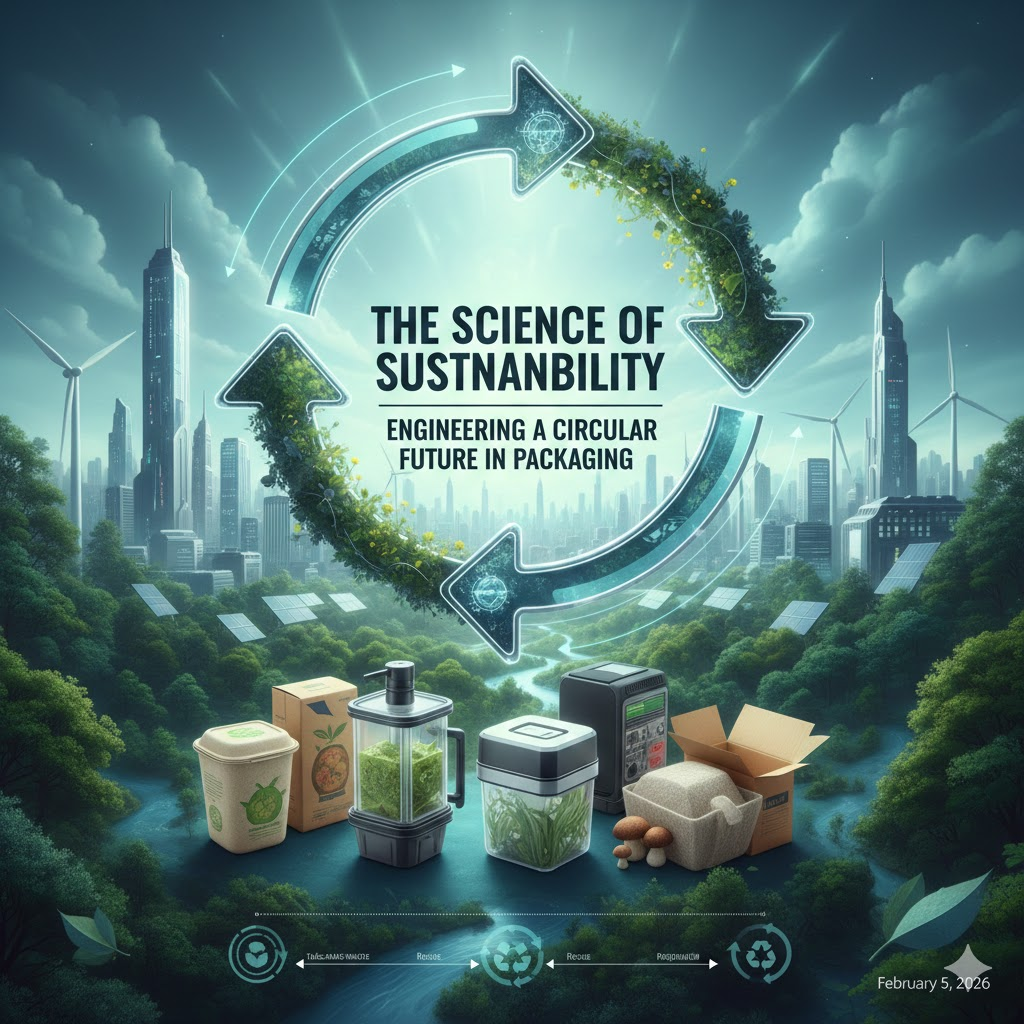
The global imperative to transition toward a circular economy has fundamentally altered the landscape of industrial manufacturing. For decades, the linear “take-make-waste” model dominated the packaging sector, relying heavily on fossil-fuel-derived polymers. However, as environmental science advances and carbon footprint metrics become standardized, the industry is undergoing a rigorous shift toward materials that prioritize life-cycle assessments (LCA) and ecological compatibility.
Material Innovation and the Biodiversity Paradigm
At the heart of modern packaging science is the development of renewable substrates that do not compromise structural integrity. Traditional plastics, while versatile, pose a significant threat to marine and terrestrial ecosystems due to their persistence in the environment. The scientific community has responded by exploring biopolymers and high-purity cellulose-based fibers that offer comparable barrier properties against oxygen and moisture.
The engineering of these materials involves sophisticated processes, such as the use of aqueous coatings and plant-derived resins. These innovations ensure that the packaging remains functional throughout the supply chain—withstanding fluctuations in temperature and mechanical stress—while remaining fully compostable or recyclable. By selecting Eco-friendly products from Bioleader Pack, enterprises can integrate these advanced material sciences into their operations, effectively bridging the gap between high-performance logistics and environmental preservation.
Analytical Approaches to Reducing Carbon Footprints
Quantifying the impact of packaging requires a deep dive into carbon sequestration and energy consumption during production. Scientific studies indicate that switching from conventional petroleum-based plastics to bio-based alternatives can significantly reduce greenhouse gas emissions. This is largely because renewable raw materials, such as bamboo or sugarcane bagasse, absorb $CO_2$ during their growth phase, creating a more balanced carbon cycle.
Furthermore, the “lightweighting” of packaging—a process of optimizing the material-to-volume ratio—plays a crucial role in logistics efficiency. Reducing the weight of a container without sacrificing its protective capabilities leads to lower fuel consumption during transportation. This dual approach of material substitution and structural optimization is essential for any organization aiming to meet international ESG (Environmental, Social, and Governance) standards.
The Role of Rigorous Compliance and Safety
In a science-led industry, claims of “sustainability” must be backed by rigorous certification and testing. This includes adherence to standards such as ASTM D6400 or EN 13432 for compostability, ensuring that materials break down into non-toxic components within specific timeframes. Moreover, food-contact safety remains a critical variable. Advanced sustainable packaging must be free from “forever chemicals” like PFAS and other synthetic additives that can leach into products.
The shift toward these safer, scientifically verified materials is not merely an ethical choice but a technical necessity. As global regulations become more stringent regarding plastic waste and chemical safety, the adoption of verified, eco-conscious solutions becomes a cornerstone of corporate resilience.
Conclusion: Implementing Data-Driven Green Solutions
The path to a sustainable future is paved with empirical data and material innovation. Transitioning away from traditional plastics requires a strategic understanding of how new materials interact with existing supply chains. By focusing on products that are engineered for both durability and degradability, businesses can ensure they are contributing to a cleaner planet without losing their competitive edge in performance.
Ultimately, the goal is to create a system where packaging never becomes waste, but rather a valuable resource in a continuous loop of renewal and reuse.
