
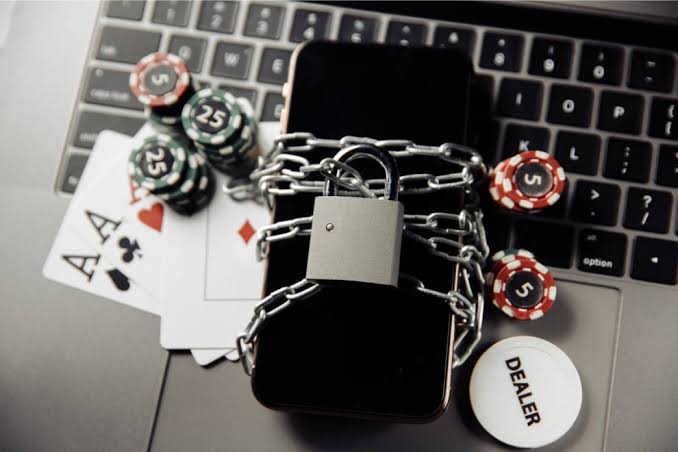
Few online transactions ask for as much personal information as a casino withdrawal. A player who has just won a modest sum can find themselves photographing a passport, scanning a utility bill and exporting bank statements before a single euro moves. To many, the demand feels excessive, and some wonder whether the operator really needs all of it, or whether the paperwork is a convenient way to slow payments down.
The answer, as this explainer sets out, is more nuanced than either suspicion or blind acceptance. Licensed casinos are legally obliged to know who they are paying and, in some cases, where the money came from. But the way that obligation is met varies enormously, and the Finnish market has become something of a test case for a leaner approach in which bank identification replaces most document uploads. Understanding the difference helps players decide how much personal data they are prepared to hand over, and to whom.
The legal reasons a casino must identify you
Anti-money-laundering rules across the EU and EEA require gambling operators to verify the identity of their customers, monitor transactions for unusual patterns and, where necessary, establish the source of a customer’s funds. Licensing authorities such as the Malta Gaming Authority and Estonia’s regulator audit compliance with these rules, and an operator that pays out without adequate checks risks losing its licence.
Alongside the anti-money-laundering layer sits a consumer-protection layer. Operators must confirm that a player is an adult, is not self-excluded, and is not playing from a jurisdiction where the operator is not permitted to serve customers. Age verification in particular is non-negotiable: online gambling is for adults aged 18 and over, and a casino that cannot prove it checked is in breach regardless of how fast its payouts are.
None of this means the operator needs everything it sometimes asks for. The law requires identification to a reasonable standard of confidence; it does not specify that a selfie holding a passport is the only acceptable method. How much data a given casino collects is as much a product decision as a compliance one.
Two models: the document pile and the bank login
Broadly, casinos serving Finnish players fall into two camps when it comes to identification.
The traditional model asks the player to register with name, address, date of birth and contact details, then, at or before the first withdrawal, to upload supporting documents: a government ID, a proof of address dated within a few months, and often a screenshot or statement showing ownership of the payment method. Each document is reviewed, sometimes automatically and sometimes by a human, and stored by the operator or its verification vendor.
The Pay N Play model, which has become dominant among Finnish-facing operators, works differently. The player deposits through an open-banking service such as Trustly or Zimpler, authenticating with their own online-banking credentials. The bank confirms the account holder’s identity to the payment provider, which passes verified name and identifying details to the casino. There is no registration form, because the bank has already done the work, and the casino receives confirmed data from a regulated financial institution rather than a photograph it has to assess.
The appeal to players is obvious, and it goes beyond convenience. The Finnish search phrase Nopea kotiutus kasino (fast-withdrawal casino) has become one of the main ways Finnish players look for a place to play, and the casinos that answer it are overwhelmingly Pay N Play sites where identity and payment are established in one step. Fast payout and lean data collection turn out to be the same design choice viewed from two angles: when the bank has already confirmed who you are, there is less to check and less to delay.
What the casino actually receives through bank identification
A reasonable privacy question is what, precisely, flows from the bank to the casino during a Pay N Play login. In general terms, the payment provider shares the account holder’s verified name, a personal identifier sufficient to confirm uniqueness and age, and the account details needed to send money back. The casino does not receive the player’s banking password, and it does not get a window into unrelated spending.
This is a materially smaller data footprint than a document upload. A scanned passport contains a photograph, a document number, nationality and sometimes a signature; a utility bill reveals a supplier relationship and an address history; a bank statement, if requested in full, exposes every transaction on the account for the period covered. Each of those is a file that must be stored, protected and eventually deleted by the operator or its vendor. Verified data passed by a bank is, by comparison, a short structured record.
That said, bank identification does not eliminate document requests entirely. It typically removes the need for ID and proof of address, but it does not by itself establish source of funds. A player whose deposits or winnings cross certain thresholds, or whose pattern of play looks unusual to the operator’s monitoring systems, may still be asked to explain where the money came from. The difference is that this becomes an exception triggered by circumstances rather than a hurdle every player must clear.
Data minimisation: the standard players should expect
EU data-protection law is built on a principle of minimisation: an organisation should collect only the personal data that is adequate, relevant and necessary for its stated purpose. Applied to casino withdrawals, this gives players a useful lens. The question to ask of any document request is not “is this annoying?” but “what purpose does this serve, and is there a less intrusive way to meet it?”
- Identity and age. Necessary in all cases. Bank identification generally satisfies it without a document.
- Address. Often required by licence conditions, though a bank-verified record may suffice. A request for a full utility bill where a verified address already exists is worth questioning politely.
- Payment-method ownership. Reasonable when a card or e-wallet is used, since the operator must ensure it pays the right person. Largely redundant when the deposit came from the player’s own bank account via open banking.
- Source of funds or wealth. Legitimate when triggered by thresholds or risk indicators, but a blanket demand for payslips from every player before a small first withdrawal is a sign of a clumsy process rather than a careful one.
Players are entitled to ask an operator why a particular document is needed and how long it will be retained, and licensed operators should be able to answer. Privacy policies, which few people read, generally state the retention period and the categories of third parties, such as verification vendors and payment providers, with whom data is shared.
Practical steps for privacy-conscious players
A player who wants fast payouts with the smallest possible data footprint can take several concrete steps.
- Prefer EU/EEA-licensed operators. Beyond the familiar point that winnings from such operators are generally tax-free for Finnish players while winnings from casinos licensed outside the EU/EEA are taxable, these operators are bound by European data-protection rules and supervised by regulators who take compliance seriously. An offshore operator may hold the same documents with far weaker safeguards.
- Choose bank identification over form registration where it is available. One verified login replaces three document uploads.
- Deposit and withdraw through the same bank account. This avoids the ownership checks that card and e-wallet methods such as Visa, Mastercard, Skrill or Neteller often trigger, and it keeps the payment path simple.
- Redact what is not needed. If a bank statement is requested to show account ownership, the operator needs the name, account number and date, not every transaction. Many operators accept a statement with unrelated lines blacked out; ask before uploading.
- Use the operator’s secure upload tool rather than email. Documents sent as email attachments sit in inboxes indefinitely.
- Read the retention section of the privacy policy, and exercise the right to request deletion once the account is closed and legal retention periods have passed.
Comparison services have started to treat this as part of the evaluation. Finnish sites such as Kotiuta publish measured withdrawal times alongside licence type, tax status and whether a casino uses Pay N Play identification, which lets a player see at a glance which operators have built their processes around bank-verified data rather than document piles. In practice, the casinos that pay in minutes and the casinos that ask for the least paperwork are very often the same ones.
Where the Finnish market is heading
Finland is moving toward a licensing model for online gambling, and privacy and payment handling are expected to be part of the regulatory conversation. A domestic licence would bring operators under Finnish supervision for both data protection and payment conduct, and could further standardise what may be requested from players and when. Open-banking identification, already common because Finnish banks support strong electronic identity, is well placed to become the default rather than the differentiator.
Whatever shape the final framework takes, the direction of travel is clear: identification that is verified by regulated institutions, requested once, and proportionate to the risk. For players, the practical takeaway is to be an active participant rather than a passive one. Ask what a document is for, choose operators whose processes are lean by design, and keep the broader picture in view. Responsible play starts from the same place: gambling is 18+ entertainment, not an income, and the discipline that leads a player to set deposit limits and use self-exclusion or blocking tools when needed also leads them to guard their personal data. A player in control of their money is usually in control of their information too.
