
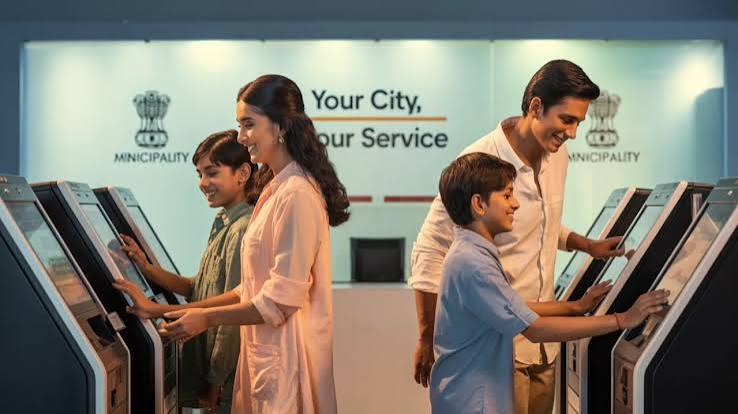
Municipal governments across the United States have spent decades managing citizen payments through a combination of in-person counters, mailed invoices, and phone-based processing. These methods work, but they come with real costs — long wait times, staffing demands, limited hours of operation, and high rates of transaction errors. As cities grow and service expectations shift, many local governments are looking at how payment infrastructure can be updated without rebuilding entire departments from the ground up.
The push is not driven by technology for its own sake. It comes from a more practical place: residents who need to pay a water bill, renew a permit, or settle a parking fine should not have to take time off work to stand in a queue. At the same time, city administrators need payment systems that are accurate, auditable, and reliable enough to operate without constant supervision. The growing adoption of automated payment terminals in public-facing government settings reflects this combination of operational pressure and changing resident expectations.
What a Government Kiosk Actually Does in a Municipal Setting
A government kiosk is a self-service payment and transaction terminal installed in a public or semi-public location — typically a city hall lobby, a utilities office, a motor vehicle branch, or a transit facility. Unlike general-purpose ATMs or retail payment terminals, these units are configured specifically for municipal transaction types: utility payments, parking violations, licensing fees, court fines, and similar obligations. A well-deployed government kiosk handles cash, card, and sometimes mobile payments, processes them in real time, and provides printed or digital receipts that satisfy compliance and audit requirements.
The distinction between a general payment terminal and a purpose-built government kiosk matters more than it might seem. Government payment environments involve a specific set of regulatory requirements around data handling, receipt documentation, and fund reconciliation. A kiosk designed for these environments is built with those constraints in mind — not adapted from a retail product and hoped to fit.
Transaction Types That Governments Commonly Process Through Kiosks
The range of payments that flow through municipal offices is broader than most residents realize. A single city department may be responsible for collecting fees across multiple categories, all of which need to be logged, reconciled, and deposited according to specific protocols. Government payment kiosks are typically configured to handle this variety within a single interface, reducing the number of points of contact a resident needs to visit.
• Utility bill payments, including water, sewer, and solid waste services, where monthly volume is high and processing errors have direct consequences for service continuity
• Parking citation payments, which often involve time-sensitive deadlines and penalty escalations that residents need to resolve quickly
• Business license renewals and permit fees, where documentation and confirmation need to be issued at the point of transaction
• Court-ordered fines and fees, which require strict audit trails and must align with case management systems
• Recreation program registrations and facility deposits, where payment confirmation needs to be immediate and tied to reservation records
Why Cities Are Moving Toward Automated Payment Infrastructure
The decision to install self-service payment terminals in government facilities is rarely about cutting staff entirely. In most cities, the goal is to redirect staff toward higher-value interactions — complex inquiries, exception handling, in-person services that genuinely require a human — while automated systems absorb the high-volume, routine transactions that currently consume a disproportionate share of counter time.
Staffing has become a consistent pressure point in local government operations. Recruiting and retaining qualified payment processing personnel is difficult in a competitive labor market, and training new staff on legacy transaction systems takes time and introduces error risk. Automated kiosks reduce that dependency without eliminating the human presence entirely. They also extend payment availability beyond standard business hours, which addresses one of the most common complaints residents have about municipal services.
Operational Continuity and Reduced Bottlenecks
Payment bottlenecks at city service counters have downstream effects that go beyond inconvenience. When residents cannot pay quickly, receivables slow down. When receivables slow down, municipalities face cash flow gaps that affect budget planning. A reliable automated payment system positioned at the front of a service area — or in an accessible lobby that stays open after hours — keeps transaction volume moving even when staffing is reduced due to illness, leave, or transition periods.
The reliability of the hardware itself matters significantly here. A kiosk that goes offline frequently, jams on cash input, or produces receipt errors creates its own set of problems: resident frustration, staff time spent troubleshooting, and gaps in the transaction log that complicate reconciliation. Cities that have had poor experiences with early-generation kiosk deployments often cite hardware reliability as the deciding factor, not the software interface or feature set.
Equity and Access Considerations in Payment Modernization
One concern that emerges consistently in discussions about automated government payment systems is whether self-service technology excludes residents who are less comfortable with digital interfaces or who rely on cash. This is a legitimate operational and policy concern, and cities that have handled it well tend to do so by treating kiosk deployment as a complement to existing service channels, not a replacement for them.
Kiosks that accept cash, provide multilingual interfaces, and offer large-print display options address a meaningful portion of the accessibility gap. According to the FDIC’s National Survey of Unbanked and Underbanked Households, a notable share of American households still rely heavily on cash for routine transactions, including government payments. A kiosk that cannot accept cash is not a complete solution for a city serving a diverse population.
How Cities Are Deploying These Systems in Practice
Deployment patterns vary significantly depending on the size of the municipality, the volume of transactions, and the physical layout of service facilities. Smaller cities often start with one or two units positioned in city hall lobbies or utility offices, running them alongside existing counter service. Larger cities with multiple service locations tend to deploy in phases, beginning with the highest-volume facilities and expanding based on resident uptake and operational data.
Placement decisions affect how much the kiosk gets used. Units positioned near building entrances, with clear signage and proximity to where residents already wait, tend to see higher usage than those placed in secondary corridors or near exits. The physical environment around the kiosk — lighting, signage, proximity to staff who can assist if needed — also influences whether residents choose to use it or default to the traditional counter.
Integration With Existing City Financial Systems
For a payment kiosk to work properly in a government environment, it needs to connect reliably with the city’s existing financial management and utility billing software. A payment that does not post to the right account in real time creates more work than it saves — staff must manually reconcile discrepancies, residents may receive erroneous notices, and the audit trail becomes complicated.
Cities that have successfully deployed kiosk payment systems typically invest time upfront in integration planning. This means working with both the kiosk vendor and the internal IT and finance teams to confirm that data flows correctly, that receipts contain the information required by local policy, and that reporting outputs align with how the finance department reconciles accounts. Skipping this step, or treating it as a secondary concern, is the most common source of implementation problems.
Maintenance, Uptime, and Service Agreements
A kiosk that is out of service defeats its own purpose. For resident-facing government payment infrastructure, uptime is not a feature — it is a baseline requirement. Cities negotiating kiosk contracts need to pay close attention to service level commitments: how quickly a technician responds when the unit goes offline, what the process is for cash cassette management, and who is responsible for consumables like receipt paper.
Remote monitoring capabilities have become a standard expectation in this space. A well-managed kiosk deployment gives city administrators visibility into transaction counts, cash levels, error rates, and connectivity status without requiring staff to physically check each unit. This kind of operational transparency reduces the risk of a unit being out of service for an extended period without anyone noticing.
What Municipalities Should Evaluate Before Expanding Kiosk Infrastructure
Cities considering their first deployment, or looking to expand an existing one, benefit from approaching the decision systematically rather than reactively. The technology itself is mature — the variables that determine success are mostly organizational and operational, not technical.
• Transaction volume analysis: Understanding which payment types and which locations generate the most counter traffic helps determine where kiosks will have the greatest impact on wait times and staffing load
• Resident demographics: Knowing the proportion of cash-dependent residents, non-English speakers, and residents with accessibility needs shapes both hardware selection and placement decisions
• Integration readiness: Confirming that existing financial and utility billing systems can accept real-time data from kiosk transactions before procurement avoids costly retrofits later
• Staff transition planning: Identifying how frontline staff roles will shift when routine transactions are absorbed by automated terminals helps manage the transition and maintain service quality
• Vendor support structure: Evaluating the vendor’s maintenance response model, parts availability, and local service presence is as important as evaluating the hardware itself
Closing Observations
The adoption of automated payment terminals in US municipal government is not a trend driven by novelty. It reflects a set of real, persistent pressures — limited staffing capacity, extended service hour expectations, the need for accurate and auditable transaction records, and a resident population with diverse payment preferences. Cities that have approached this carefully, with attention to integration, placement, accessibility, and vendor reliability, have generally found that the operational benefits justify the investment.
What makes government payment modernization different from similar efforts in the private sector is the accountability dimension. Every transaction processed through a city payment system represents a public obligation — a fine, a fee, a utility charge — and the system handling it needs to be accurate and documentable. That standard does not change because the interface is automated. If anything, it raises the bar for how well the technology needs to work and how carefully it needs to be maintained. Cities that keep that standard at the center of their procurement and deployment decisions are the ones most likely to see lasting results.
