
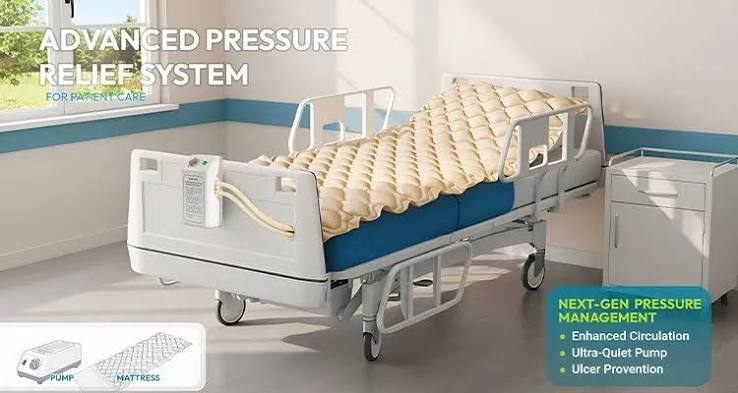
When patients spend extended periods in bed, comfort and skin protection become important parts of their daily care. The right mattress can help support proper positioning, improve rest, and address specific healthcare needs. An air mattress for hospital bed is designed to provide adjustable support, with certain models using alternating air pressure to help redistribute pressure across the body.
Whether you are equipping a hospital, nursing home, rehabilitation center, or home healthcare environment, understanding how these mattresses work can help you select an option that suits the patient’s needs.
What Is an Air Mattress for a Hospital Bed?
An air mattress for a hospital bed is a medical support surface that uses air-filled chambers or cells to provide cushioning. Depending on the design, the mattress may maintain a consistent level of inflation or use a powered pump to adjust air pressure automatically.
Some models are designed primarily for comfort, while others are intended to help manage pressure injury risk in patients with limited mobility. These products vary in construction, pressure settings, weight capacity, and intended use, so it is important to review the manufacturer’s specifications before purchasing.
Unlike a conventional foam mattress, an alternating-pressure air mattress changes the inflation of different air cells in a programmed cycle. This changes how pressure is distributed across the support surface.
Key Benefits of Hospital Bed Air Mattresses
1. Pressure Redistribution
Patients who remain in bed for long periods may experience prolonged pressure on areas such as the heels, hips, shoulders, and lower back. Some medical air mattresses are designed to redistribute this pressure and reduce its concentration in particular areas.
Alternating-pressure systems periodically inflate and deflate different air cells, changing the support provided to different parts of the body. The suitability of this technology depends on the patient’s individual risk factors and care plan.
An air mattress does not eliminate pressure injury risk on its own. Regular skin assessments, repositioning when appropriate, nutrition, and an individualized prevention plan remain important.
2. Adjustable Support
Many powered air mattresses include a pump that controls inflation levels. This can help caregivers adjust the support surface according to the patient’s needs and the manufacturer’s instructions.
Some systems offer different operating modes, such as alternating pressure or a constant-pressure setting. The available functions vary by product, so healthcare professionals should confirm which settings are appropriate for the intended patient.
3. Improved Comfort for Extended Bed Rest
A suitable support surface can make resting more comfortable for patients who have difficulty changing position independently. Air-filled cells may help distribute body weight across the mattress surface, depending on the system’s design and settings.
Comfort is individual, however. Mattress selection should take into account the patient’s condition, mobility, sensitivity, and personal preferences.
4. Support for Caregivers
Some air mattresses include controls that allow caregivers to monitor inflation, adjust settings, or respond to system alarms. These features can make routine management easier when staff receive appropriate training.
A mattress should complement good caregiving practices rather than replace regular monitoring, repositioning, or other prescribed interventions.
Types of Air Mattresses for Hospital Beds
Different designs serve different purposes. Understanding the main categories can help narrow your options.
Alternating-Pressure Air Mattresses
These mattresses use a powered pump to inflate and deflate groups of air cells in a repeating cycle. They are commonly considered for patients who require additional pressure redistribution.
Before selecting one, review its pressure settings, cycle options, alarm functions, and suitability for the patient’s weight and clinical needs.
Low-Air-Loss Mattresses
Low-air-loss systems are designed to allow controlled airflow through or around the support surface. Depending on the design, this may help manage the microclimate at the skin’s surface by reducing excess moisture and heat.
These systems may be considered for patients with particular skin-care requirements, but their suitability should be determined by qualified healthcare professionals.
Static Air Mattresses
Static air mattresses provide cushioning through air-filled chambers without necessarily cycling pressure automatically. They may suit some patients who need an alternative support surface, although they do not offer the same functions as powered alternating-pressure systems.
The best choice depends on the patient’s needs, the intended care environment, and the product’s clinical specifications.
What to Consider When Buying an Air Mattress for a Hospital Bed
Mattress Size and Compatibility
Confirm that the mattress dimensions match the hospital bed frame. Check the length, width, attachment method, and compatibility with adjustable bed sections. An unsuitable fit can affect stability and create safety concerns.
Weight Capacity
Review the manufacturer’s stated weight range and safe working limits. The mattress must be appropriate for the patient and compatible with the bed itself.
Pump Performance and Noise
For powered models, consider pump reliability, operating noise, controls, and alarm features. A pump that is straightforward to operate can help caregivers manage the mattress more consistently.
Cover Material and Cleaning
Healthcare mattresses need covers that can be cleaned according to infection-control procedures. Check whether the cover is fluid-resistant, removable, and compatible with the cleaning products used in your facility.
Maintenance and Support
Ask about warranties, replacement air cells, pump servicing, and access to technical support. Reliable after-sales service can be especially important in facilities where equipment is used around the clock.
Who May Benefit from a Hospital Bed Air Mattress?
Air mattresses may be appropriate for patients with limited mobility, people who spend substantial time in bed, and individuals who have an elevated risk of pressure injuries. Some systems may also be used as part of a treatment plan for patients with existing pressure injuries.
However, not every patient needs a powered air mattress, and not every model is suitable for every clinical situation. A healthcare professional should assess the patient’s condition and recommend a support surface that aligns with the overall care plan.
For home healthcare, caregivers should also consider the available space, access to a reliable power supply, ease of use, and the ability to respond to pump alarms or equipment problems.
Final Thoughts
Choosing an air mattress for a hospital bed requires careful consideration of comfort, pressure redistribution, mattress compatibility, weight limits, and maintenance requirements. Alternating-pressure, low-air-loss, and static air systems offer different features, making it important to match the product to the patient’s specific needs.
By comparing product specifications and seeking guidance from qualified healthcare professionals, hospitals, care facilities, and families can make a more informed decision. The right support surface, combined with appropriate clinical care and regular monitoring, can contribute to a safer and more comfortable patient experience.
