
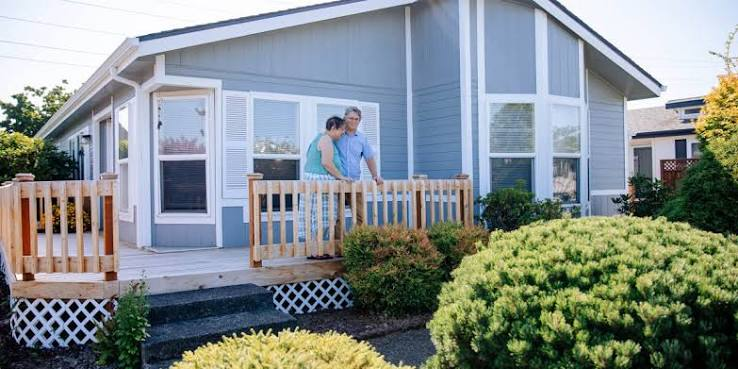
Buying a manufactured home in California has become a practical option for many households priced out of traditional single-family real estate. The state’s persistent affordability gap has pushed more buyers toward factory-built housing as a legitimate, long-term housing solution rather than a temporary workaround. But the financing path for these homes is not the same as it is for site-built properties, and many buyers discover that gap only after they have already committed to a purchase.
The loan approval process for manufactured homes involves a separate set of rules governing property classification, land ownership, foundation standards, and lender eligibility. These are not minor technical details — they determine which loan programs apply, what interest rates are available, and whether a transaction can close at all. Understanding these distinctions before making an offer is what separates buyers who close on schedule from those who lose time and money on failed financing attempts.
This guide walks through the core factors that determine approval outcomes for manufactured home financing in California, including property classification, loan program eligibility, and the documentation lenders require to underwrite these transactions.
How Manufactured Home Loans Work in California
Manufactured homes are built in a factory to standards set by the U.S. Department of Housing and Urban Development and then transported to a permanent or semi-permanent site. This production method creates a distinct legal and financial category that most conventional mortgage guidelines treat differently from site-built homes. For buyers pursuing california manufactured home loans, this distinction has direct consequences for which lenders will participate, what terms are available, and how the property must be titled and situated.
When a manufactured home is placed on land the buyer also owns and is permanently affixed to a foundation, it can often be converted to real property — meaning it is treated more like a conventional home from a financing standpoint. When the home sits on leased land, such as inside a manufactured home community or park, it is typically classified as personal property, which limits the available loan programs and usually results in shorter loan terms and higher interest rates.
For buyers who want to access the broader range of loan products — including those backed by the Federal Housing Administration or conventional programs — the home must meet specific criteria around foundation type, titling, and age. The process of meeting those criteria is manageable, but it requires planning and coordination with the seller, the lender, and sometimes local county offices.
Detailed program requirements, including current eligibility criteria for California borrowers, are outlined through resources like the california manufactured home loans program page, which covers available loan types and what lenders look for when evaluating these applications in the current market.
Real Property vs. Personal Property Classification
The classification of a manufactured home as either real property or personal property is the single most consequential determination in the financing process. Real property classification means the home and land are treated as a combined asset, much like a traditional house. Personal property classification means the home is treated more like a vehicle — it can be titled separately, moved, and financed through chattel loans, which carry different underwriting standards.
To convert a manufactured home from personal property to real property in California, the owner must retire the title through the Department of Housing and Community Development and record the home as a fixture on the land. This process requires a permanent foundation that meets HUD standards, proof of land ownership, and in some cases a foundation inspection conducted by a licensed engineer. Lenders backing government-supported loan programs will require this conversion before approving a mortgage.
Buyers purchasing a home that has not yet been converted should factor the time and cost of that process into their transaction timeline. Sellers may be willing to complete the conversion prior to closing, but this needs to be negotiated early in the purchase process to avoid delays.
Loan Programs Available for Manufactured Homes
Several distinct loan programs apply to manufactured home purchases in California, each with its own eligibility rules, down payment requirements, and property standards. The right program depends on the buyer’s financial profile, whether they own the land, and the age and condition of the home itself.
FHA Title I and Title II Loans
The Federal Housing Administration backs two programs relevant to manufactured housing. Title I loans can be used to purchase a manufactured home on leased land, making them accessible for buyers in park or community settings. Title II loans, which follow standard FHA guidelines, require the home to be on land the borrower owns and to meet real property classification requirements. Title II loans generally offer better terms and longer repayment periods, but they also require the home to have been built after June 1976 — the date HUD standards took effect — and to carry a HUD certification label.
FHA financing for manufactured homes also comes with specific appraisal requirements. The appraiser must evaluate not only the home’s condition and market value but also the site, the foundation type, and whether the property meets current HUD installation guidelines. Buyers should work with appraisers experienced in manufactured housing to avoid delays or valuation disputes during underwriting.
Conventional and GSE-Backed Programs
Fannie Mae and Freddie Mac both offer loan programs that can be applied to manufactured homes meeting certain standards. These programs, known as MH Advantage and CHOICEHome respectively, are designed for newer manufactured homes built to higher construction and design standards. Homes qualifying under these programs typically feature site-built characteristics such as drywall interiors, energy-efficient construction, and specific exterior and roofline requirements.
For buyers whose home qualifies, these programs can offer competitive interest rates and down payment options closer to what a site-built home buyer would access. However, not all manufactured homes will meet these standards, and the qualifying criteria are stricter than those for FHA loans. The benefit is meaningful for buyers who can find a home that meets them.
VA and USDA Loan Options
Eligible veterans may use VA benefits to finance a manufactured home, though lenders offering VA loans for these properties are fewer in number than those handling conventional transactions. USDA Rural Development loans are another option for buyers purchasing in qualifying rural areas of California, which includes many parts of the Central Valley, northern counties, and inland regions. Both programs have property eligibility requirements that overlap with those of FHA Title II, including permanent foundation standards and real property classification.
What Lenders Evaluate During Underwriting
Manufactured home loan underwriting follows the same core credit and income analysis as any other mortgage, but adds a layer of property-specific review that can introduce complications if the home’s documentation is incomplete or inconsistent. Lenders examine the HUD data plate and certification labels to confirm the home meets federal standards, review the title history to confirm ownership and any existing liens, and may require a foundation inspection to verify compliance with current installation requirements.
The Role of the HUD Data Plate and Certification Labels
Every manufactured home built after June 1976 is required to carry a HUD data plate, which is a paper document located inside the home, typically in a cabinet or near the electrical panel. It lists the home’s specifications, wind zone, and thermal zone ratings, and confirms compliance with HUD construction standards. Separately, the home should have HUD certification labels — small metal plates affixed to the exterior — that serve as proof of inspection during manufacturing.
If either the data plate or certification labels are missing, the transaction becomes more complicated. Lenders financing under FHA or GSE guidelines require this documentation. In cases where the labels are missing, buyers or sellers may be able to obtain a label verification letter from the Institute for Building Technology and Safety, which administers the HUD manufactured housing program and maintains production records that can confirm a home’s original compliance status.
Title Search and Lien Resolution
Because manufactured homes can carry personal property titles separate from the land, lenders will require a thorough title search that accounts for both. Unresolved liens, prior financing recorded against the home as personal property, or inconsistencies in how ownership has been documented can all delay or prevent closing. Buyers should request a full title history early in the process and, if any issues appear, work with a title company that has specific experience handling manufactured home transactions in California.
Common Reasons Applications Stall or Are Declined
Most manufacturing home loan applications that fail in California do so for reasons that were knowable before the buyer made an offer. The home’s age, foundation type, and titling status are all verifiable before a purchase contract is signed. A home that was never converted to real property, has a foundation that does not meet current standards, or lacks HUD certification documentation will struggle to pass underwriting under most government-backed programs.
Buyers who research these conditions in advance — and who work with lenders familiar with manufactured housing — are significantly more likely to reach closing without disruption. The key is not to treat the financing as something separate from the property evaluation. For california manufactured home loans, the property itself is part of the qualification, and its condition and documentation status are just as important as the buyer’s credit score or income.
Working with Lenders Who Understand Manufactured Housing
Not all mortgage lenders actively offer manufactured home financing, and among those who do, the level of experience varies considerably. Lenders who regularly close these transactions understand the documentation requirements, know how to coordinate foundation inspections, and can identify title issues before they become closing delays. Choosing a lender based on familiarity with manufactured housing — rather than simply general mortgage volume — is a practical decision that reduces execution risk.
For california manufactured home loans specifically, it is worth asking prospective lenders how many manufactured home transactions they close annually, which programs they offer, and whether they have in-house or preferred appraisers with manufactured housing experience. These questions surface the information needed to make a sound lender selection before committing to a purchase timeline.
Conclusion
Getting approved for a manufactured home loan in California is a structured process with specific requirements at every stage — from property classification and foundation compliance to title documentation and program eligibility. The buyers who move through it most efficiently are those who understand these requirements early, select their lender based on relevant experience, and address any property-side issues before entering contract.
The financing framework for manufactured housing is well-established. It is not more difficult than conventional mortgage lending — but it is different, and treating it as equivalent to a site-built home transaction is where most delays originate. With the right preparation and the right lender, California manufactured home financing is a workable and often competitive path to homeownership for buyers who approach it with clear information from the start.
