
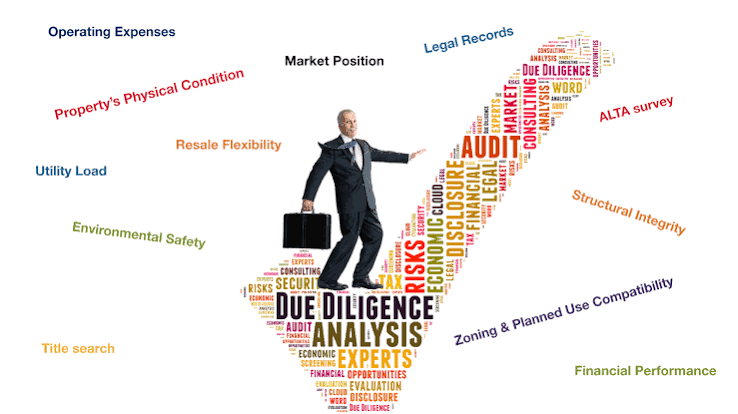
Commercial real estate transactions in the United States involve a substantial number of moving parts, and each one carries its own category of risk. Legal, financial, structural, and zoning reviews are typically well-understood by the parties involved. Buyers, lenders, and developers generally know what to expect from title searches or appraisals. Environmental review, however, tends to receive less systematic attention — even though its findings can halt a transaction, alter financing terms, or expose a buyer to long-term legal liability.
This is not a theoretical concern. Contamination discovered after closing, or liability inherited from a previous property owner, has created significant financial and legal problems for buyers who treated environmental review as a box to check rather than a genuine component of their risk management process. Understanding where environmental assessment sits within the broader due diligence framework — and what it actually involves — helps buyers and their advisors make better decisions at every stage of a transaction.
What Environmental Site Assessment Services Actually Cover
environmental site assessment services are structured investigations designed to identify whether a property has existing or potential contamination from hazardous substances or petroleum products. These assessments follow a phased methodology established under federal standards, and they serve a dual purpose: they protect buyers from inheriting environmental liability, and they provide lenders with the information they need to evaluate collateral risk on a commercial loan.
The process begins with what is known as a Phase I assessment. This phase involves a review of historical records, regulatory databases, aerial photographs, and site documentation, combined with a physical site inspection and interviews with current or past property owners and occupants. No soil or groundwater sampling occurs at this stage. The goal is to identify recognized environmental conditions — situations where contamination may exist based on historical use, adjacent properties, or observed conditions at the time of inspection.
If the Phase I assessment identifies conditions that warrant further investigation, a Phase II assessment is initiated. This phase involves physical sampling and laboratory analysis to determine whether contamination is actually present and, if so, at what levels. Phase II findings inform remediation decisions, renegotiation of purchase terms, or in some cases, the decision not to proceed with a transaction at all.
The standards governing this process are outlined by the Environmental Protection Agency’s All Appropriate Inquiries rule, which defines what constitutes a compliant Phase I assessment for purposes of establishing liability protection under federal law.
Why Phase I Is Tied to Legal Protection, Not Just Information
Completing a Phase I environmental site assessment in compliance with federal standards gives a buyer access to what is known as the innocent landowner defense. This legal protection, established under the Comprehensive Environmental Response, Compensation, and Liability Act, can shield a buyer from liability for contamination they did not cause, provided the assessment was conducted properly before closing and no recognized environmental conditions were overlooked or dismissed without justification.
This matters because environmental liability under federal law can be retroactive. A buyer who purchases a property without completing a compliant assessment, or who ignores findings from one, may be held responsible for contamination caused by a previous owner decades earlier. The cost of remediation alone can exceed the value of the property itself in serious cases, and that exposure stays with the property regardless of how ownership changes hands.
The assessment, then, is not purely informational. It is part of a legal defense strategy that must be executed before the transaction closes. Attempting to establish this protection after the fact is not possible.
How Environmental Review Integrates with the Broader Due Diligence Timeline
Commercial real estate due diligence typically runs on a defined timeline established in the purchase agreement. Buyers and sellers agree to a period during which the buyer may investigate the property and, depending on findings, either proceed, renegotiate, or withdraw. Environmental assessment needs to be initiated early within this window, not near its end.
Phase I assessments generally take several weeks to complete when conducted properly. Rushing the process introduces the risk of incomplete records review or inadequate site inspection, which can undermine both the quality of the findings and the legal defensibility of the report. If Phase II work is triggered by Phase I findings, additional time is required for sampling, laboratory analysis, and reporting — a timeline that can extend by months depending on the nature and extent of the conditions identified.
Coordinating Environmental Findings with Other Due Diligence Components
Environmental findings rarely exist in isolation. A Phase I assessment that identifies a former dry cleaning operation on the subject property, for example, has direct implications for the property’s title, its financing, its insurance coverage, and potentially its intended use. These findings need to be shared across the due diligence team so that legal counsel, lenders, and the buyer’s advisors can account for them in negotiations and in deal structuring.
Lenders in particular pay close attention to environmental findings. Many commercial lenders require a Phase I assessment before issuing a commitment on any transaction involving real property. Some require Phase II work if Phase I findings suggest contamination risk. A lender’s environmental requirements are not optional — they are a condition of financing, and failing to meet them can delay or prevent closing.
Zoning and land use considerations may also intersect with environmental findings. A property with residual contamination may face restrictions on its permitted uses, or may require regulatory approval before redevelopment can proceed. Understanding these constraints early allows buyers to adjust their development plans before significant capital has been committed.
Environmental Risk Across Different Commercial Property Types
Not all commercial properties carry the same level of environmental risk, but the range of property types that have been exposed to potential contamination is broader than many buyers expect. Industrial sites with a history of manufacturing, processing, or chemical storage are obvious candidates for environmental review. Less obvious, but still meaningful, are properties with former gas stations, auto repair shops, dry cleaners, or agricultural operations in their history — uses that are common in urban and suburban areas and that can leave persistent contamination in soil and groundwater.
Even properties that appear low-risk based on current use may have a more complex history. A retail strip center may have been built on a site that previously housed light industrial tenants. An office building may sit adjacent to a property with contamination that has migrated beneath the subject parcel. Environmental site assessment services address both on-site conditions and the influence of neighboring properties, which is why a complete records and database review is a foundational part of the process.
Redevelopment and Brownfield Transactions Require Additional Attention
Buyers pursuing redevelopment opportunities or acquiring properties with known histories of industrial use face a more complex environmental process. These transactions often involve brownfield sites — properties where contamination or the perception of contamination complicates reuse. Many states have brownfield programs that offer liability protections and sometimes financial incentives to buyers who complete cleanup in accordance with regulatory requirements, but accessing those programs requires working through a structured assessment and remediation process.
The environmental due diligence in these transactions is typically more extensive, and the findings carry greater weight in negotiations. Sellers of brownfield properties may be required to disclose known conditions, and buyers need to understand what remediation would cost, how long it would take, and what regulatory approvals would be required before a site could be used for its intended purpose. Underestimating these variables at the due diligence stage has been the source of significant financial losses in redevelopment projects across the country.
What Buyers Often Overlook in the Environmental Review Process
One of the more common gaps in commercial real estate due diligence is the assumption that a Phase I assessment completed for a previous transaction remains valid for a current one. Environmental standards are updated periodically, and an assessment conducted several years ago under a prior standard may not satisfy current lender requirements or provide the same level of legal protection. Buyers who rely on outdated reports are exposed to both regulatory and liability risk.
Another gap is the selection of the environmental professional conducting the assessment. Phase I assessments must be conducted by a qualified environmental professional as defined under federal standards. Not all firms or individuals meet this definition. Buyers who engage underqualified assessors — often to reduce cost — may find that their report does not satisfy lender requirements or does not establish the legal protections they expected.
The scope of the assessment also matters. Environmental site assessment services vary in thoroughness, and a minimal report that satisfies a basic lender checkbox may not surface conditions that a more thorough review would identify. Buyers who are acquiring properties with complex histories or significant development potential should ensure the scope of the assessment reflects the risk profile of the transaction.
Closing Thoughts on Environmental Due Diligence in Commercial Transactions
Environmental site assessment is not a peripheral step in commercial real estate due diligence — it is a core component that affects legal liability, financing eligibility, and the long-term viability of a property for its intended use. Understanding how it integrates with the broader transaction process, and what it actually involves, allows buyers and their advisors to approach it with the seriousness it warrants.
The cost of a thorough environmental review is modest relative to the financial exposure it can prevent. Properties that appear straightforward on the surface can carry significant historical risk, and that risk does not disappear at closing — it transfers. Buyers who treat environmental assessment as a genuine part of their evaluation process, rather than a procedural formality, are in a materially better position to protect their investment and manage the risks inherent in commercial property ownership.
For transactions that require this level of scrutiny, working with experienced professionals who understand both the technical and regulatory dimensions of environmental review is the most reliable way to ensure that due diligence is complete before commitments are made.
